
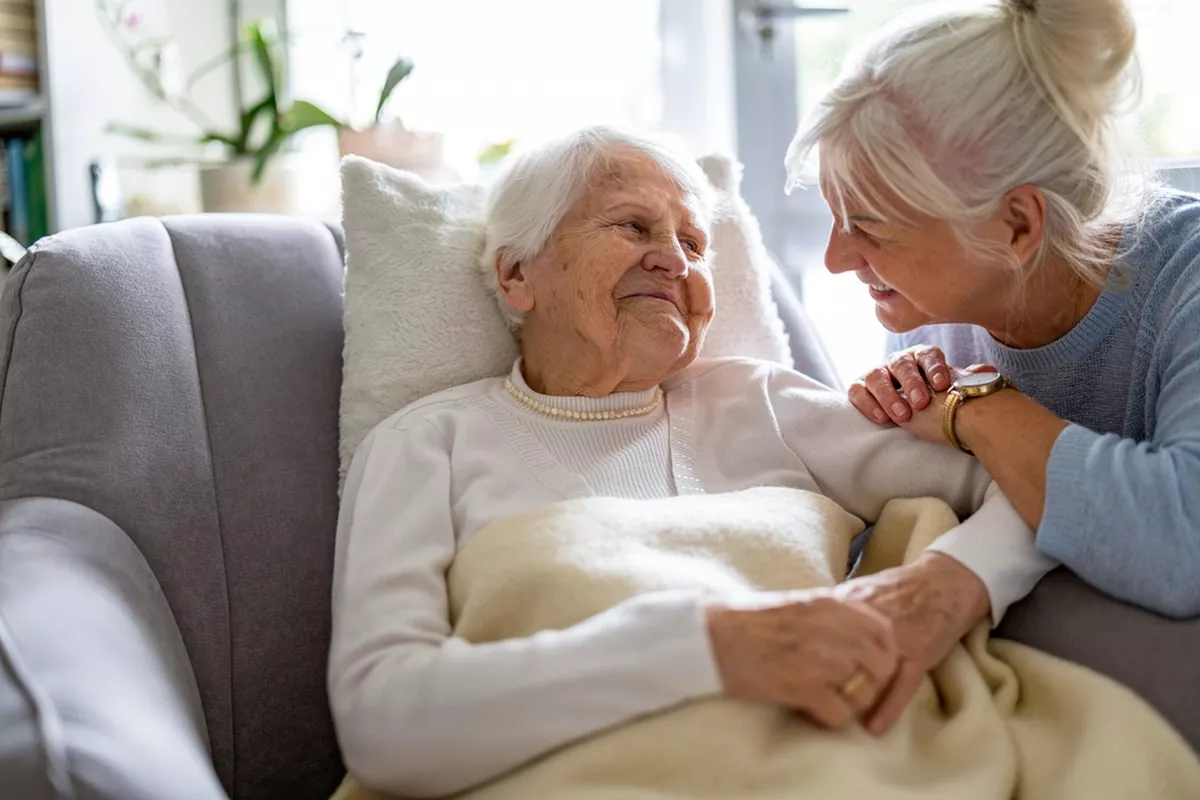
Summary: Family involvement plays a vital role in improving outcomes for memory care residents, complementing the professional support provided in memory care communities. This blog explains how consistent visits and engagement from loved ones enhance emotional, physical, and overall well-being.
- Enhanced well-being: Familiar faces provide comfort, strengthen emotional connections, and help staff deliver more personalized care.
- Emotional support: Shared moments—like reminiscing or simple touch—offer meaningful reassurance that clinical care alone cannot replace.
- Better communication: Families help care teams understand residents’ histories, preferences, and behavioral patterns.
- Peace of mind: Regular visits allow families to monitor care quality and track their loved one’s condition.
- Mutual support: Visits can connect families to support groups and resources for navigating dementia care.
One of the best facets of memory care is the constant support and assistance it provides to memory care residents. Whether living from Alzheimer’s Disease or another form of dementia, people in memory care communities are offered best-in-class support from team members who have trained to work directly with those in cognitive decline. And family members often breathe a sigh of relief when their loved ones are cared for.
However, this isn’t to say family should take a hands-off approach to care once their loved one is comfortably situated within a memory care community. Instead, it’s often the residents whose family members are involved in their ongoing care who display better health outcomes than those who . And the research often supports it.
Here are a few of the ways your loved one stands to benefit from regular and ongoing visits and support from you and other members of your family after being registered into a memory care setting.
Enhanced Well-Being
For a person living with memory care, a visit from a loving, supportive, and familiar person can offer enormous benefit to both mind and body. Beyond helping medical providers understand what physical or behavioral changes might fall outside of your loved one’s normalcy, your sheer presence offers a bonded comfort that staff members simply can’t.
Consider, for a moment, a child caring for a parent with dementia. While the medical staff in a memory care community can tend to the resident’s medication, therapies, nutrition, interventions, and enrichment, their support is professional in nature. Only someone familiar and with a shared history can provide an emotional connection during, say, moments of reminiscence or when helping remember names and faces from the past. And this can represent an enormous emotional salve of sorts to a resident struggling with their memory.
Visiting a parent with dementia can also help them received more tailored and personalized care. As one of the few people who knows their personal history, their behavioral quirks, and more, you represent the best means to communicate their needs and limitations to the care team.
Emotional Support
A loving touch. A shared laugh. A trip down memory lane. These, and the countless other hallmarks of time spent with a loved one, can be an enormous boon to someone experiencing cognitive decline.
While your loved one’s skilled nurses can focus on physical support, cognitive therapies, symptom monitoring, medication levels, and more, you can focus, instead, on your loved one’s emotional needs during a fraught time. Their physical safety is tantamount (which is, likely, why you enrolled them in memory care in the first place). But nothing can quite match the impact an emotionally touching moment shared with a kindred soul can offer.
Some ask, can you visit residents living with dementia. too much? And while most memory care communities will not bar family members from visiting, it’s worth recognizing that not every day will be productive or emotionally positive. Ultimately, how often should you visit parent in assisted living comes down to your emotional tolerance, your loved one’s triggers, and recommendations from the care team.
Of course, visits aren’t just about supporting your loved one. A visit to your loved one’s community can also offer access to support groups for families of residents living with dementia.And for those who have walked the path of a caregiver, these groups can represent a lifeline.
Peace of Mind
It can be hard to go from seeing your loved one with relative frequency to having to simply trust that they are doing well in their new setting. However, regular visits with memory care residents offers a moment built into your routine to ensure they are continuing to receive the care they need and are, relatively speaking, doing well.
These visits can offer the chance to chart the progression of their condition, can help put your mind at ease that you have selected the right setting per their needs. After all, you want what is best for your loved one. And a regular check in ensures they are getting just that.
Find Quality Memory Care for Your Loved One
If you are caring for a parent with dementia and require an added level of support to ensure their safety and supported well-being, consider Summerfield of Stockton.
Our premium memory care community here in Stockton, CA offers 24/7 care for seniors living with from Alzheimer’s Disease or other forms of cognitive decline. Residents here are safe, happy, and supported through personalized therapies, group enrichment programs, and much more.
Our team also offers support groups for families as part of our comprehensive memory care services. Here, both you and your loved one will find everything you need for a better and more supported day-to-day.